
Buying your first home can feel like an overwhelming, confusing process. There is a lot to think about and organise, but arranging a relevant survey should be high on your list of priorities.
Today, we de-mystify the world of first-time buyer surveys, covering what they are, why you need one and which one to choose. If you’ve got any questions, we’re always on hand to help.
Why do I need a survey?
When you buy a house, you should make sure there are no hidden flaws that could affect your decision. While you are not legally required to get a survey, it’s unwise to buy a property without one.
Is my mortgage lender’s valuation the same as a survey?
No. This is often confusing and definitely worth clarifying: a mortgage lender’s valuation is not the same as a specialist property survey.
If you are getting a mortgage, your lender will carry out a valuation on the proposed property. This is simply a risk assessment against lending criteria and a way for the lender to determine the property’s value, so they can sell it and recoup the money they’ve lent you should you default on your payments. The valuation does not involve a detailed survey inspection of the property.
Under such circumstances, you should arrange a detailed property survey separately.
What is a survey for first time buyers?
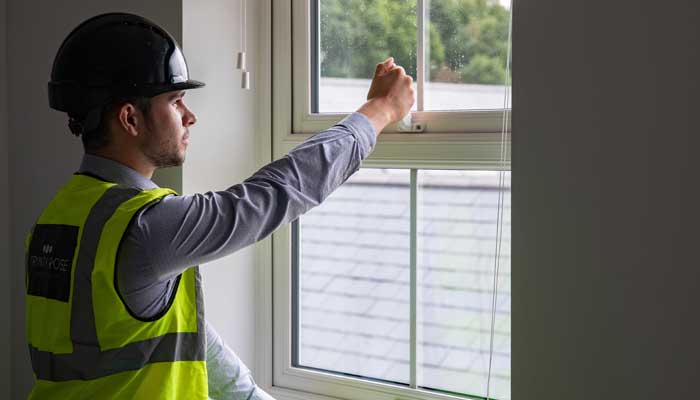
A specialist property surveyor carries out an inspection, checking for a range of hidden issues such as damp, subsidence and old electrics. Once they’ve finished, they’ll send you a detailed, jargon-free report with condition ratings and photographs detailing their findings. While they are written as clearly as possible, this guide helps explain how to read a report, and we are always on hand to answer any questions. You should especially look out for red flags.
Based on the information in your report, you may choose to:
- Continue with the purchase, happy with the property
- Negotiate the price based on issues that will need attention
- Ask the seller to rectify issues before you purchase
- Pull out of the purchase
What does a surveyor check?
When they carry out an inspection, your surveyor will visit the property and look at a range of things. The full list depends on the type of survey chosen but here’s an example property survey checklist:
Exterior checks
- Roof condition
- Chimneys
- Brickwork/render
- Gutters and drainage
- Cracks and movement
- Windows and doors
- Permanent outbuildings, grounds and boundaries
Interior Checks
- Damp and mould
- Cracks in walls/ceilings
- Flooring condition
- Signs of leaks
- Ventilation issues
- Structural concerns
- Subsidence indicators
- Sagging roofs/floors
- Structural movement
- Alterations without proper support
- Services and safety
Surveyors are sometimes limited in what they are able to observe, but with training and experience, they are able to spot tell-tale signs of a huge range of issues. They will also look at:
- Visible plumbing issues
- Heating concerns
- Electrical warning signs
- Loft and roof space
- Insulation
- Timber condition
- Signs of leaks or woodworm
- Boundary issues
- Retaining walls
- Drainage concerns
- Trees close to the property
Choosing the right first-time buyer survey
When arranging your first property survey, it can be difficult to choose and we are very happy to help you select the right one. As a guide, the type of survey you need depends on the property, its age and condition:
| Survey | Property type | Overview |
| Level 1: RICS Home Condition Report | Conventional and newer properties | This basic survey looks at:
|
| Level 2: Homebuyers Report (Home Condition Survey) | Standard properties in reasonable condition | The most popular survey option covering everything in the Level 1 Survey plus ‘surface-level’ issues:
|
| Level 3: Building Survey (commonly called a Structural Survey) | Larger, older or unusual properties, those in poor condition/if you’re planning renovations | The most comprehensive RICS survey includes everything in the other surveys plus:
|
Older properties generally have greater potential for serious issues and usually benefit from more in-depth investigations. These surveys cost more but are definitely worth the investment. If you’re considering an older property, this article has more information about what you should consider before signing the paperwork.
Common issues first-time buyers don’t expect
Viewing properties is so exciting, and it’s natural to get carried away and begin imagining life in your new home. However, a detailed survey report will be invaluable to find out if there are hidden issues that could be costly and disappointing once it’s too late to back out or negotiate.
When we carry out house surveys for first-time buyers, the most common issues they’re surprised by are:
- Hidden damp
- Poor ventilation/condensation
- Roof, chimney and gutter defects
- DIY alterations
- Insufficient insulation
None of these problems are necessarily deal-breakers, but they’re certainly worth knowing about and often impossible for the untrained eye to spot.
Get in touch
While property surveys and their findings may be a daunting concept, they are designed to empower buyers, not frighten them.
At Trinity Rose, we have years of experience helping guide first-time buyers through the property surveying process. We appreciate that you may feel confused or overwhelmed, but we’re here to help, and there are no silly questions.
If you’re in the process of buying a property, need advice on choosing a survey or simply want to talk to a professional, please get in touch with our knowledgeable, approachable team.