
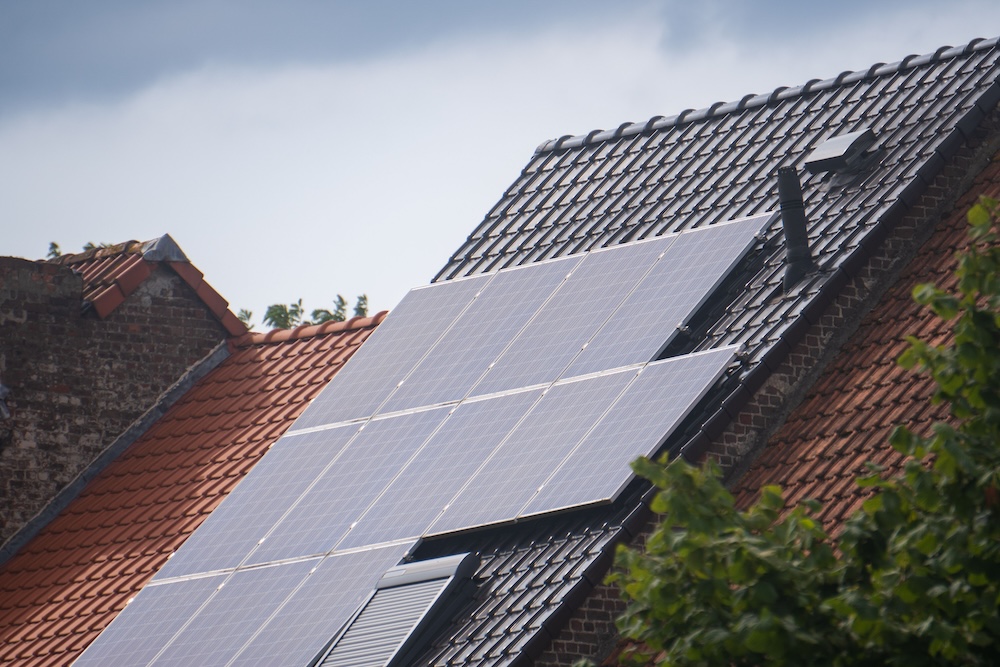
When property hunting, you might not initially pay much attention to what’s on a house’s roof. However, buying a house with solar panels can cause more complications than you realise.
While solar panels can be a huge asset and are becoming increasingly common in Hampshire, Dorset and West Sussex, you should consider potential complexities such as structural issues and who retains ownership of the equipment.
Today we are looking at the pros and cons of buying a house with solar panels and what you should do when considering your property options.
Owned vs leased panels and why it matters enormously
The first thing to understand is who actually owns the panels on a property’s roof. You may think they simply belong to the homeowner, but leased panels (historically common via schemes in the government’s Feed-in Tariff era) can mean a third party retains rights to the equipment.
When the homeowner signs a lease agreement, they legally commit to allowing the solar company to:
- Install and maintain the panels
- Access the roof for repairs
- Receive the feed‑in tariff (FIT) income
- Have rights to approve roof repairs/loft conversions/extensions
The lease term is typically 25 years and, if you buy a property with leased solar panels, you must take on the remaining lease.
How to check if solar panels are leased
- Ask the seller
- The seller should provide relevant documents if panels are leased such as the lease agreement, the installations certificate, the FIT registration.
- You can also check the Land Registry.
- Sometimes the EPC (which must legally be provided) states “panels owned by third party” or similar.
- Your solicitor/conveyancer will also carry out checks and confirm the terms of any lease.
Mortgage implications of leased panels
Having leased solar panels can make getting a mortgage challenging. Lenders may be put off by the solar company having too much control over the roof; the lease may prevent the lender taking possession of the property; and the lease may not be compliant with UK Finance guidelines.
Buying a house with solar panels? Here is what you need to check
If you are keen to buy a house with solar panels, a relevant property survey will cover the panels themselves. Your surveyor will check:
- Age and condition of the panels
- Quality of the installation – was it done by an MCS-certified installer?
- Whether the installation has affected the waterproof roof covering beneath
- Condition of mounting brackets, fixings and flashing
- Whether the installation complies with permitted development rules or requires planning permission
House survey for solar panels – structural and roof considerations
Your property surveyor will check for any structural issues caused by the addition of solar panels to a roof. This helps you better understand what you could be taking on and may affect your decision to purchase.
Solar panels add significant load to a roof. Your surveyor will investigate whether the roof structure was assessed before installation and check for signs of deflection, sagging or stress. This is a particular concern for older, pre 1950s roof structures.
Electrical and inverter checks
Aside from the physical panels adding load to a roof, your surveyor will also look into the possibility of electrical/inverter problems:
- The inverter is the component most likely to need replacing – it has a much shorter lifespan than the panels themselves.
- They will check for EIC/MCS documentation, i.e. whether the electrical installation has been certified.
- They will look into whether changes to the consumer unit were made properly.
Note: While a surveyor will flag any concerns, a qualified electrician would be needed for a full assessment.
Warranties, documentation and Feed-in Tariff
With the installation of solar panels and the associated agreements, there is a collection of documents that you should check:
- Performance warranties (often 25 years on panels, 10 on inverters)
- Whether warranties are transferable to the new owner
- Can the Feed-in Tariff be transferred and if so, what is the process?
- What are the lease terms and in particular, the costs (for example, are there escalating costs stated in the lease)
- What will it cost to buy the equipment from the lease company at the end of the term?
- What are the cost implications if I want to end the lease early?
If any of the key documents are missing, the seller should ask the solar company for replacement documents. If the company no longer exists/the documents are still unavailable, you can arrange an independent solar panel inspection to confirm correct installation, and inverter age and condition.
For leased panels
If lease documents cannot be procured from the seller or solar company, it may be impossible to obtain a mortgage and/or the sale will stall.
For owned panels
Missing documents are less serious, but you may lose warranty cover or be unable to claim FIT payments; you may need an electrical safety check, and you should consider indemnity insurance.
Get in touch
While buying a house with solar panels can seem daunting, they can be a very positive feature. The important thing is to do your research to ensure there are no legal, cost or structural concerns, so that you may contemplate the purchase whilst fully understanding your potential responsibilities/restrictions.
If you need any help with choosing an appropriate survey or just have a few questions, we are here to support you. Please get in touch with our team of RICS surveyors to book a survey or find out more.